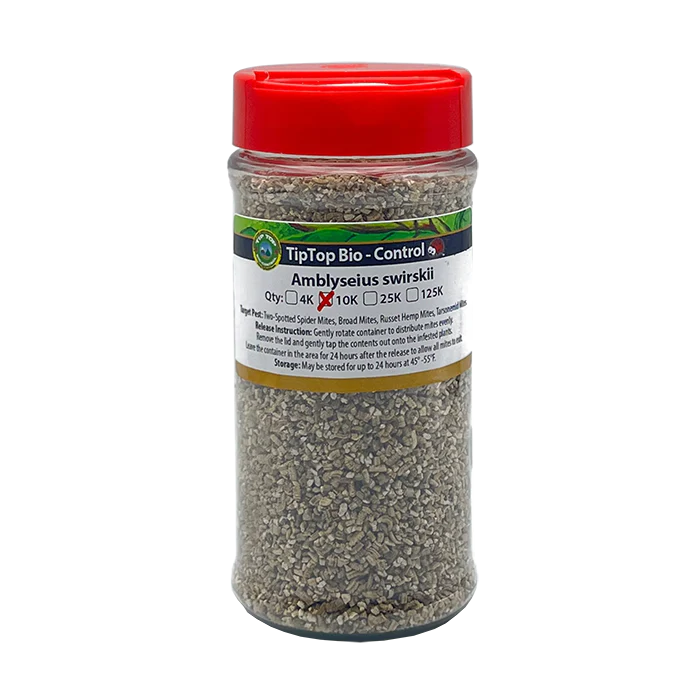
Tip Top Bio-Control Amblyseius Swirskii Beneficial Insects, Bottle of 10,000
Amblyseius Swirskii-This Generalist Attacks Many Species
Live insects from Tip Top Bio Are Expedited To Ensure Your Insects Arrive Quickly & Safely.
A. swirskiis are well suited for warm and humid climate conditions. They lay an average of two eggs per female per day. They feed on Thrips, Whiteflies, Spider Mites, Tarsonemid mites and pollen.
Target Pests:
- Broad Mites
- Thrips
- Russet Hemp Mites
- Spider Mites
- Tarsonemid Mites
- Whiteflies
When these pests aren't around A. swirskii can consume pollen.
Release Rates
- For adults, release 2-10 per sq.ft., bi-weekly, as needed.
- For sachets, hang 1 sachet per 6 sq.ft., but may increase to 1 per plant, depending on crop. Hatches for several weeks!
Ideal Temperatures:
- Most effective at 50-85°F, and a relative humidity of 70%. These predators are most effective from March to November.
Product Information
Product Information
Shipping & Returns
Shipping & Returns
Description
Amblyseius Swirskii-This Generalist Attacks Many Species
Live insects from Tip Top Bio Are Expedited To Ensure Your Insects Arrive Quickly & Safely.
A. swirskiis are well suited for warm and humid climate conditions. They lay an average of two eggs per female per day. They feed on Thrips, Whiteflies, Spider Mites, Tarsonemid mites and pollen.
Target Pests:
- Broad Mites
- Thrips
- Russet Hemp Mites
- Spider Mites
- Tarsonemid Mites
- Whiteflies
When these pests aren't around A. swirskii can consume pollen.
Release Rates
- For adults, release 2-10 per sq.ft., bi-weekly, as needed.
- For sachets, hang 1 sachet per 6 sq.ft., but may increase to 1 per plant, depending on crop. Hatches for several weeks!
Ideal Temperatures:
- Most effective at 50-85°F, and a relative humidity of 70%. These predators are most effective from March to November.